Full Clinical Picture
Before your biopsy, Dr. Parikh reviews your complete thyroid history, any prior imaging, your symptoms, and relevant lab work. He doesn't just look at the nodule in isolation — he evaluates you as a patient with a story.
A radiologist collects cells. A thyroid surgeon understands what those cells mean — and has the expertise to act on the results from day one.
When you get a thyroid biopsy at a hospital or imaging center, it's typically performed by a radiologist. They are skilled at navigating a needle to a target using ultrasound — but their role ends when the sample is collected.
They don't know your medical history beyond the imaging order. They don't know whether your nodule is at the edge of surgical risk or clearly benign. They don't know if you'd be a candidate for non-surgical treatment like RFA. And they have no clinical relationship with you.
You walk out with a promise that results will go to your referring doctor — who may or may not have the thyroid expertise to fully interpret them. If something concerning comes back, you start over: another referral, another wait, another specialist who is meeting you for the first time.
Fragmented care means delays. Delays mean anxiety, repeated imaging, and sometimes missed windows for optimal treatment. When your biopsy provider is also your treatment expert, everything moves faster and more efficiently.
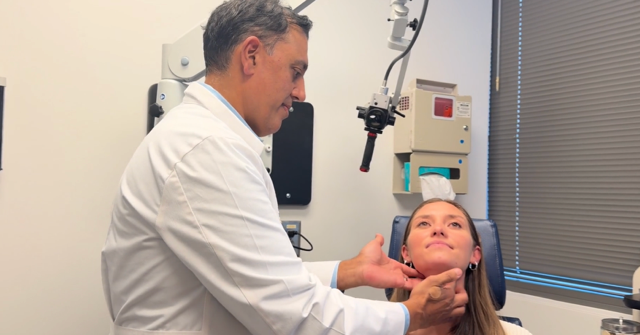
It's not just about who holds the needle. It's about what happens before, during, and after — and the depth of judgment brought to each step.
Before your biopsy, Dr. Parikh reviews your complete thyroid history, any prior imaging, your symptoms, and relevant lab work. He doesn't just look at the nodule in isolation — he evaluates you as a patient with a story.
As a thyroid surgeon, Dr. Parikh can immediately contextualize your biopsy result within the landscape of what surgery would involve for your specific anatomy — complexity, risk factors, and realistic outcomes.
Dr. Parikh specializes in RFA (radiofrequency ablation), a non-surgical alternative for many thyroid nodules. When reading your results, he already knows whether you might avoid surgery entirely — something a radiologist cannot assess.
When your results come back, Dr. Parikh calls you. He explains what the pathology means, what the Bethesda category implies about cancer risk, and what your options look like — in plain language.
In the fragmented model, results flow through multiple intermediaries before you get a plan. With Dr. Parikh, you already have a relationship with the doctor who will guide treatment. Results lead directly to action — not more waiting rooms.
Thyroid biopsies are reported using the Bethesda System. A surgeon understands how each Bethesda category translates to surgical decision-making — guiding whether to watch, repeat the biopsy, or proceed with molecular testing or surgery.
| Factor | Radiologist at Hospital / Imaging Center | Dr. Parikh — Thyroid Surgeon |
|---|---|---|
| Reviews your history before biopsy | Rarely — limited to imaging order | ✓ Full history, labs, and imaging review |
| Understands surgical implications | No — outside their specialty | ✓ Board-certified thyroid surgeon |
| Discusses results with you directly | Rarely — routes to referring MD | ✓ Personal call from Dr. Parikh |
| Can act on results immediately | No — requires new specialist referral | ✓ Already your treatment physician |
| Same-day consult + biopsy | Rarely — typically separate visits | ✓ Standard of care at our office |
| Facility fee charged | Yes — adds significant cost | ✓ No facility fee (in-office) |
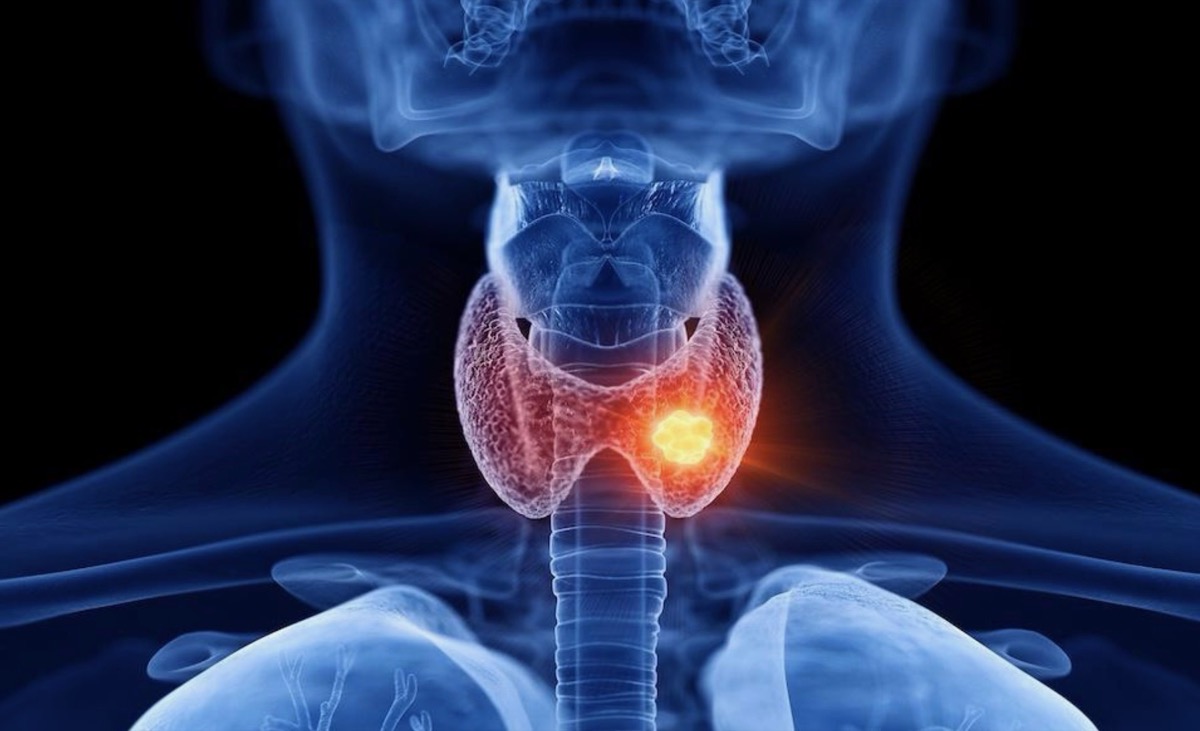
Thyroid FNA results are reported using the Bethesda System for Reporting Thyroid Cytopathology — a six-tier classification from "non-diagnostic" to "malignant."
The problem: categories III (Atypia of Undetermined Significance) and IV (Follicular Neoplasm) carry cancer risks that range widely — anywhere from 6% to 35% or more depending on your specific clinical context. The right response isn't the same for everyone.
He doesn't give you a Bethesda number and send you home. He sits with you and walks through what it means in the context of your health, your priorities, and your options — whether that's watchful waiting, RFA, or surgery.
What you do after the biopsy matters more than the biopsy itself. That's why starting with the right doctor is so important.
Think of it this way: getting your biopsy from a radiologist is like getting a car inspection from someone who has never driven. They can tell you what's there — but not what to do about it.
Dr. Parikh is a thyroid surgeon who also performs non-surgical RFA. When he performs your biopsy, he brings the perspective of someone who:
The result is a biopsy that doesn't just generate a report — it generates a relationship with the person best qualified to guide what comes next.
“I was nervous about getting a biopsy, but what I didn't expect was that Dr. Parikh would sit with me afterward and walk through every possible scenario based on my result. He didn't just perform the procedure — he became my doctor. I left feeling like I had a plan, not just a lab slip.”
— Jennifer C., Thyroid Biopsy Patient, Atlanta Office
“My endocrinologist sent me to an imaging center. I waited three weeks for results, then got a form letter telling me to call my referring doctor. When I found Dr. Parikh for my next nodule, the difference was total — he called me personally, explained my Bethesda result, and laid out three real options. That's what care looks like.”
— Robert L., Thyroid Biopsy Patient, Marietta Office
“I had a Bethesda III result and my previous doctor said ‘let's watch it.’ Dr. Parikh was the first person who actually explained what that meant and why molecular testing made sense for me. Having a surgeon do your biopsy isn't just about the needle — it's about having someone who understands what comes next.”
— Sarah M., Thyroid Biopsy Patient, Atlanta Office
Skip the fragmented, high-cost imaging center experience. One visit, one expert, one path forward.
Schedule Online (770) 282-9353